
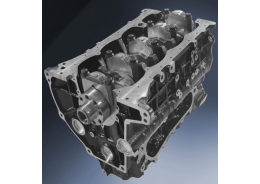
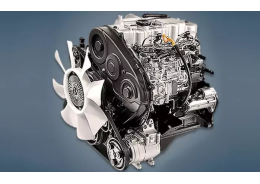
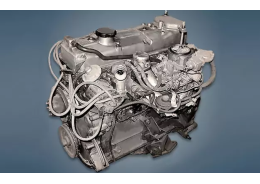
Because the working principle of the engine is similar, the basic structure is similar. Generally speaking, gasoline engines are composed of two major institutions and five major systems, while diesel engines are generally composed of two major institutions and four major systems (non-ignition systems).
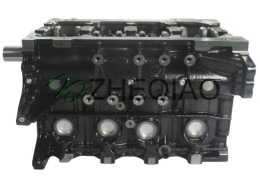
Engine assembly
Crank linkage mechanism.The core of thermal energy conversion is also the basis of engine installation and configuration.
Valve mechanism.Make sure the cylinders are ventilated in time.
Fuel system.Adjust the amount of fuel injected into the cylinder during each cycle to adjust the engine's power output and speed.
Automotive engine cooling system.Adjust the normal operating temperature of the engine.
Lubrication system.Shorten friction and extend engine life.
Ignition system.Timely supply of sparks to gasoline engines (diesel engines have no ignition system).
Start.Turn the crankshaft to complete the engine starting process.
Fuel supply system: (1)Basic component
The carburetor fuel system is the basic component and may include a gasoline supply device (including a gasoline tank, a gasoline filter and a gasoline pump), an air supply device (including an air body filter, an intake muffler, a heating and cooling air conversion mechanism, etc.). By developing a device for changing the mixture of gases (carburetor), an intake and exhaust device (including an intake branch pipe and an exhaust).
(2)Combustion system
Composition: The traditional type is composed of batteries, generators, ignition coils, circuit breakers, spark plugs, etc. A normal ignition system is similar to a conventional ignition system, except that the circuit breaker is replaced by an electronic component. Electronic ignition is a full electronic ignition system, completely eliminate the mechanical device, by the electronic system to adjust the ignition time, including batteries, generators, ignition coils, spark plugs and electronic regulation system.
(3)Cooling system
Composition: The water-cooled type is composed of water jacket, water pump, radiator, fan, temperature controller, etc. The air-cooled type consists of a fan and a heat sink.
(4)Lubrication system
Composition: Composed of oil pump, filter, pressure limiting valve, oil circuit, oil filter, etc.
The above is a brief introduction to the engine parts for friends. The engine is the heart of the car, so it is very important for the car to choose a cost-effective engine. I hope my brief introduction will solve the problem for you.
 English
 German
 French
 Russian
 Spanish
 Japanese
 Korean
 Portuguese
 Ukrainian
 Arabic
 Italian
